The world
Welcome to the Steel Highway
It's 2047. The interstates belong to whoever is armed enough to drive them, the towns live behind walls, and every night of the week half the continent tunes in to watch armored cars tear each other apart for money. You run one of the outfits that do the tearing.
How it fell apart
Nobody pressed a button. The country came apart a piece at a time through the twenties, and by the time anyone noticed, the pieces had learned to live without each other.
- The Squeeze ('21–'29). A contractors' war overseas left warehouses full of surplus guns. The oil fields faded, gasoline was rationed, and the country went electric. Drought set the Great Basin fighting over water; a blight took three harvests running. In '29, the Bad Year, the food riots burned Newark's port district.
- The Withdrawal ('30–'32). The Corridor Act pulled federal patrols back to a handful of maintained roads. Everything between them became the badlands, and the gangs moved onto the interstates. State after state made vehicle-mounted weapons legal. The war surplus poured onto the market.
- The Founding ('33–'36). The courts ruled that signed waivers made arena combat a legal contest. Promoters, insurers and broadcasters chartered the NAAA to give the new sport one rulebook, and carved the continent into territories.
- The Boom ('37–'46). A world championship, armed courier work, lasers in the arenas, a black market that moves every week, and a satellite network that shows every card coast to coast the morning after.
The sport
Road combat runs like the old territorial wrestling promotions. The NAAA (the North American Asphalt Association) writes the rules, certifies the arenas, keeps the rankings and owns the national title. It works out of a Manhattan tower full of cigar smoke and carbon-copy forms. Some of its officials are honest.
The continent is split into territories. Each one has a promoter who books the cards, sets the purses, protects the local stars and settles disputes off the books; a home arena with its own customs and crowd; and a TV show on the local station. Promoters keep their territory as long as they pay their dues and deliver the gate.
Outfits are the teams: an owner, a garage of cars, and the hired drivers, gunners, mechanics and medics who crew them. Some outfits are old names with deep pockets. Yours is new.
Every arena runs a card every week, one fight night each: Tuesday at Hangar Nine, Wednesday at Pad Zero, Thursday at Dead Mile, Friday at the Furnace Bowl, Saturday at the Copper Pit, Sunday at the Refinery Oval. Cars are matched by what they're worth: Division 10 (cars worth up to $10,000), Division 25 (up to $25,000) and the Open. Now and then a promoter puts on an invitational, invitation only, for a purse worth crossing the country for.
The dead are remembered. Dead Mile paints their names on the customs house wall, and the league keeps them on the home page as the Roll.
The territories
Six territories hold an NAAA charter. The first four date from the founding; the Sunbelt and Cascadia fought outlaw cards for a decade before the NAAA let them in, and 2047 is their first sanctioned season.
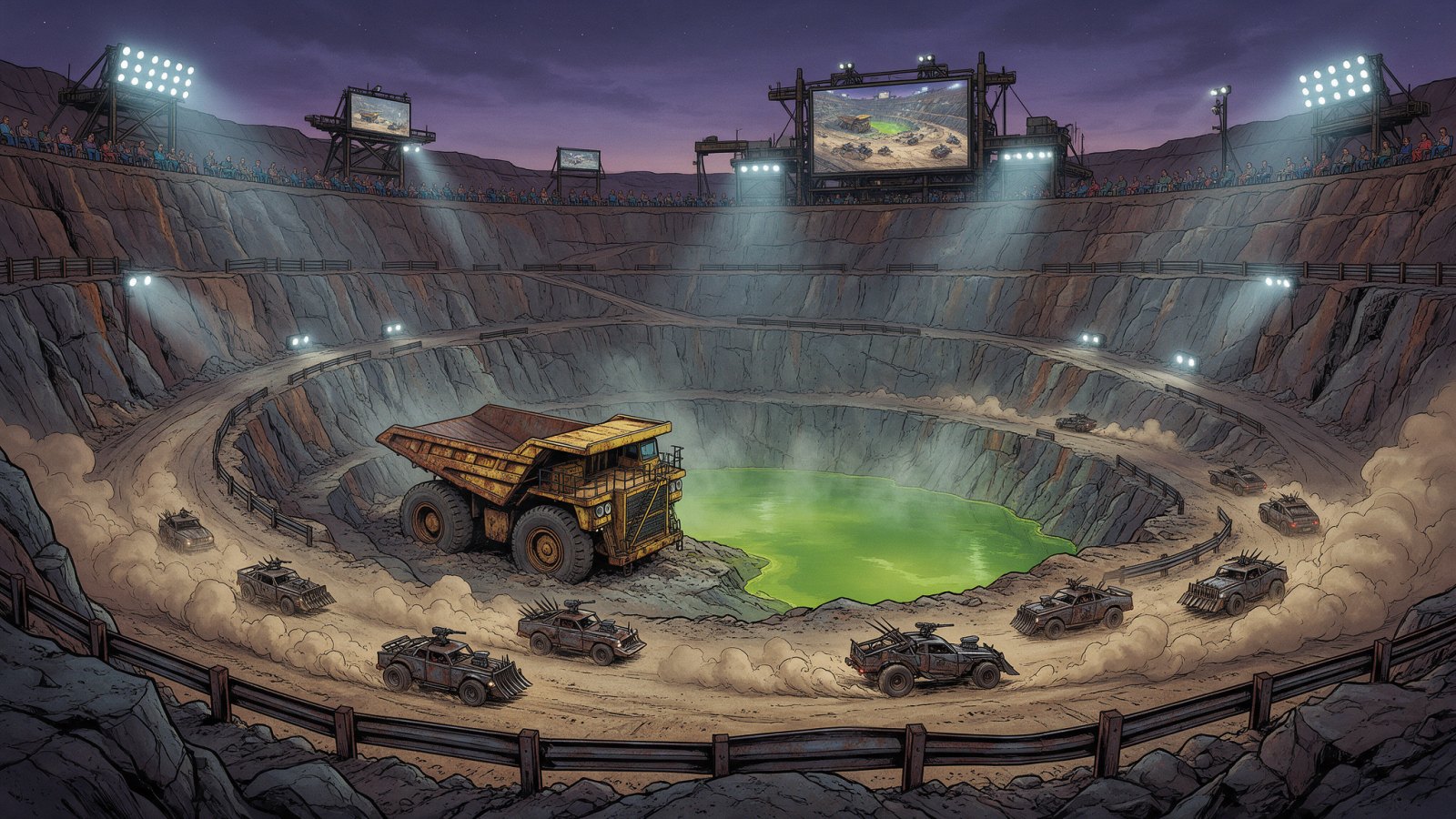 Basin & Range
The Copper Pit
Bingham Flats, Utah
“Two thousand feet of hole, and nobody coming down to get you.” Promoter: Lyle Dacre · on TV: Deep Cut
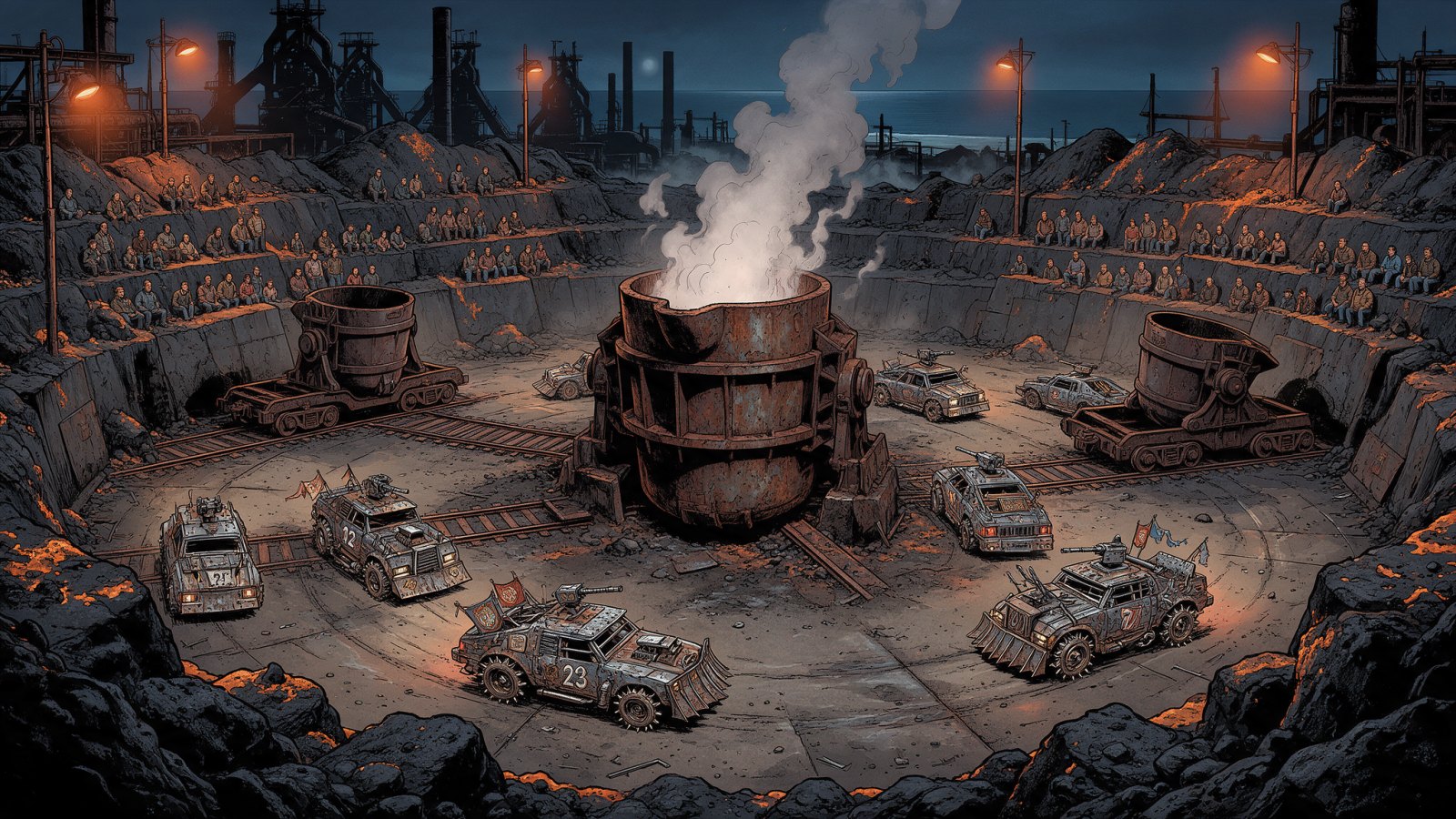 Great Lakes
The Furnace Bowl
Gary, Indiana
“The mill's been dead twenty years. The fire never went out.” Promoter: Foundry Workers Local 66 · on TV: Friday Night Furnace
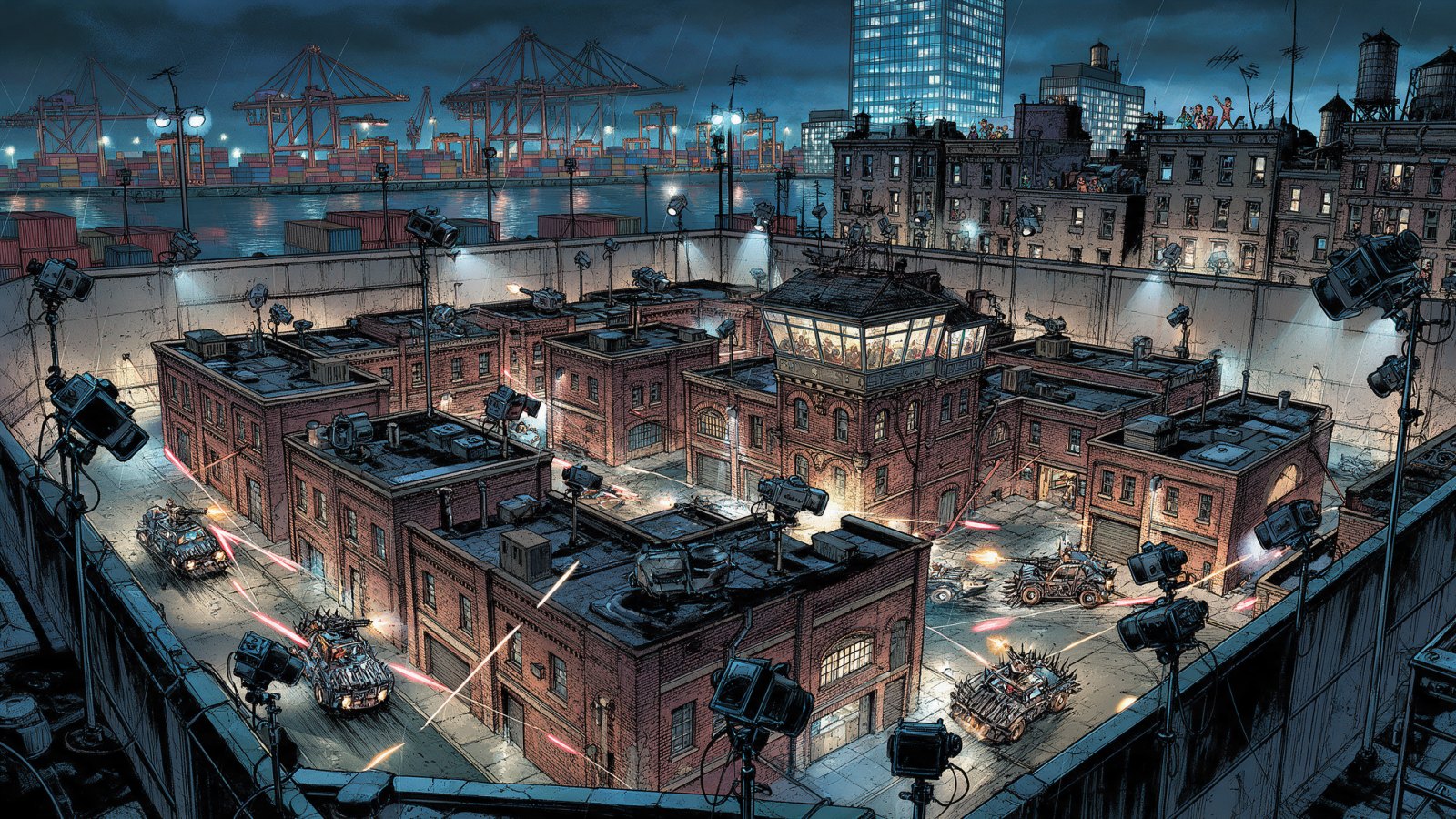 Atlantic Seaboard
Dead Mile
Newark, New Jersey
“Six blocks. Forty cameras. No way out but forward.” Promoter: Sal Ferrante (Tri-State Broadcast) · on TV: Dead Mile Live
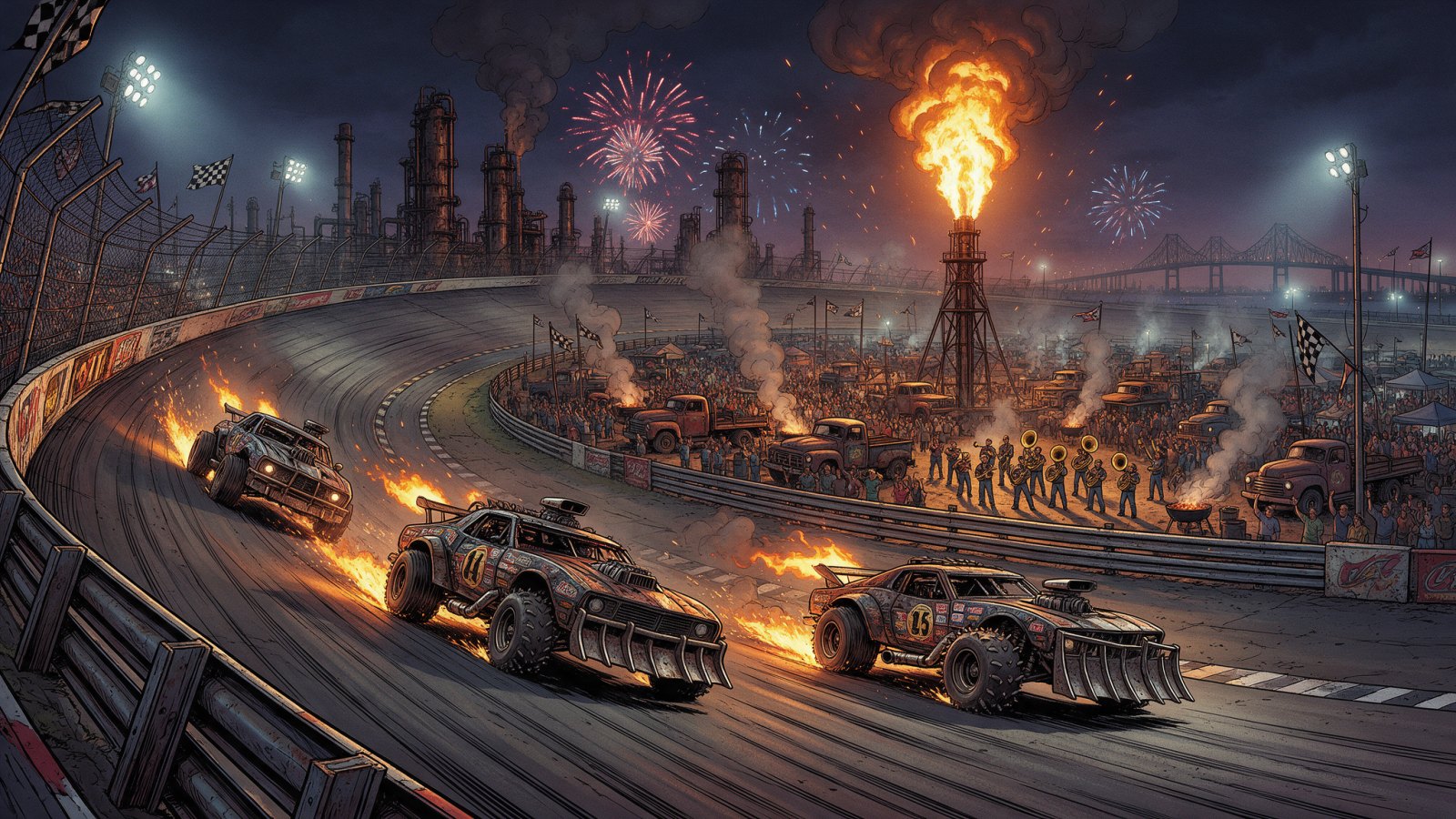 Gulf Coast
The Refinery Oval
Pasadena, Texas
“Banked for speed. Built on fumes.” Promoter: The Marchand family (Salamander Ordnance) · on TV: Sunday Flare
 Cascadia
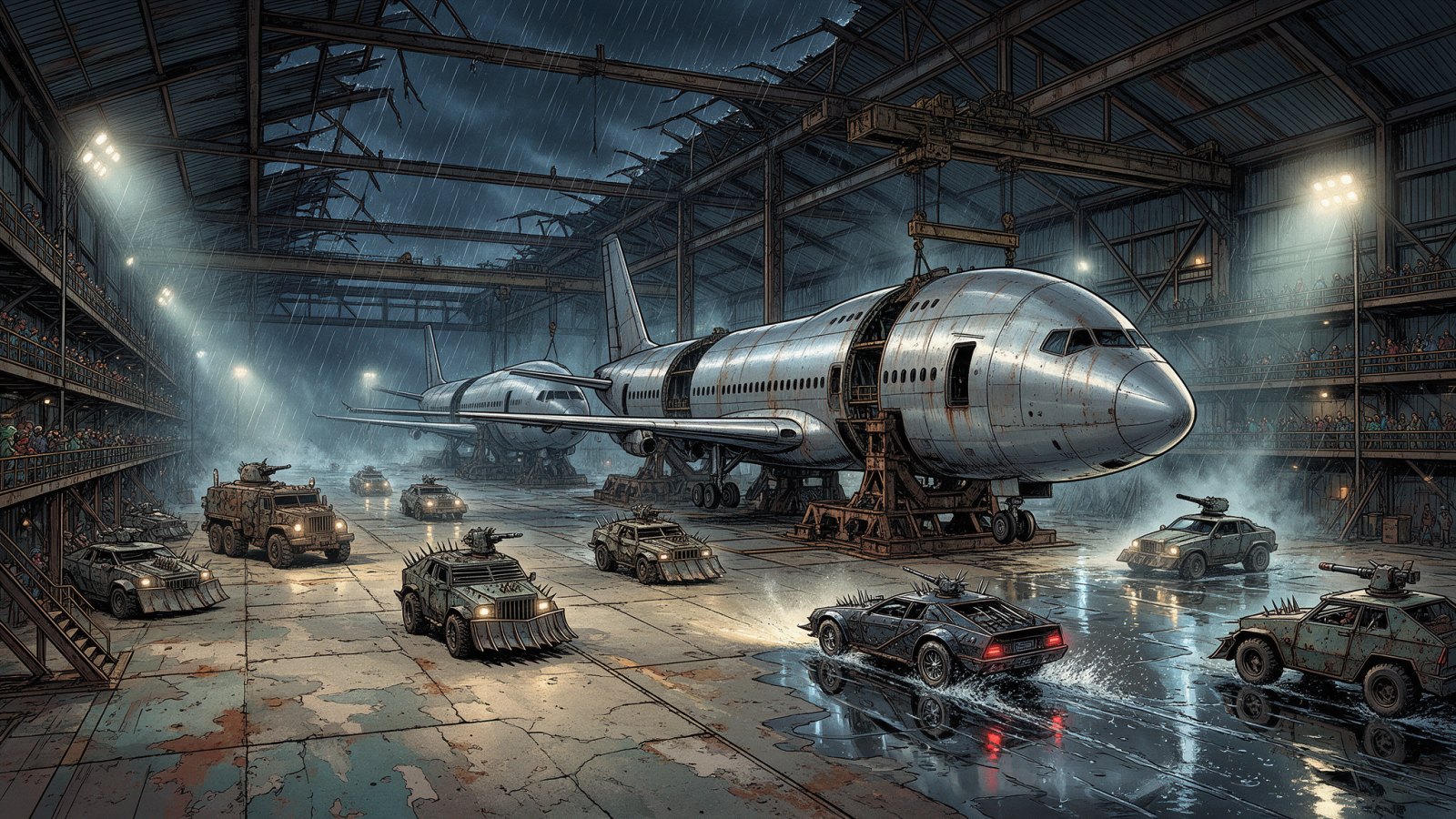
Hangar Nine
Everett, Washington
“Nothing leaves this building with wings.” Promoter: Ingrid Solberg (Hangar Nine) · on TV: Grounded
 Sunbelt
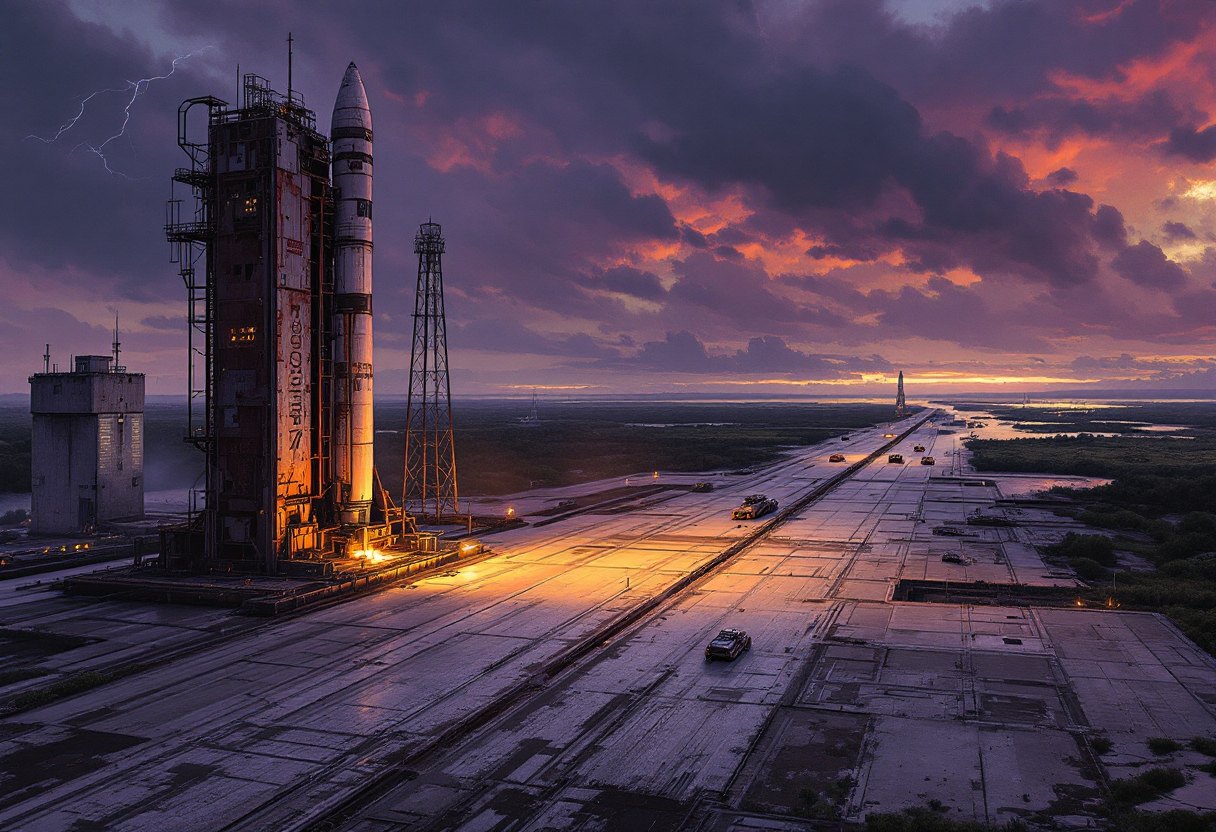
Pad Zero
Titusville, Florida
“The last launch never left. Neither will you.” Promoter: Marisol Pike (Pad Zero) · on TV: T-Minus
The road
Between the territories is the badlands: interstates nobody patrols, towns behind walls, truck stops with gun ports. Outfits travel in convoy and drive by day. The fast roads are where the gangs hunt; the back roads are slower and safer, and longer.
Rail freight died in '40, so everything moves by armed courier. Four outfits run the boards:
- The Independent Haulers' Exchange: a board in every town, honest loads, honest pay, a forgiving clock.
- Town contracts: the walled towns hiring for supplies, medicine and mail.
- Meridian Freight: corporate, punctual, well paid, and unforgiving. Hijackers love a Meridian load.
- Night Freight: what nobody else will carry, at rates nobody else pays. The checkpoints want a word.
Atlanta is the freight exchange: every company posts there, with the biggest boards and the best rates on the continent.
On the road you'll meet road hazards, stranded travelers (some of them bait), cycle gangs, road pirates, rival crews, hijackers and NAAA checkpoints. The map shows every road coloured by danger and every rig out driving it. The factions →
Who has the money
- Mama Kessel's Gunworks & Garage. Wilhelmina Kessel opened a garage in Toledo in '30, fitting guns to haulers' trucks on credit, and kept a very good list of who owed her. Now there's a Kessel's in most towns: parts at list, fair repairs, and the catalog every outfit lives out of. The catalog →
- The brands. Halberd Dynamics built the war's guns and sells the surplus. Moriyama-Voss makes the lasers, Voltaic the power plants, Blackmere the tires, Salamander the flamethrowers. Thirteen of them keep offices on Peachtree Row in Atlanta and sponsor outfits that win in their territory.
- The workshops. One specialist in every territory, a weekly shelf of rare upgrades you can't get anywhere else, fitted in their own bays. The workshops →
- The carmakers. Corsair ("Everybody's first. Nobody's last."), Halloran, Kestrel and Dockside Iron build the bodies and sell stock cars off the lot.
- The book. Dot Pruitt has taken bets on the arenas since before there was a league. Her board opens a day before every fight. Dot Pruitt's book →
Your people
You're the owner, never a driver. Everyone who climbs into your cars is hired: a name, a hometown, a record and a set of skills. They come from the NAAA's free-agent pool, which turns over every week, or, for the veterans and legends, from the talent agency in Atlanta, which takes its cut. They're paid a signing fee, a weekly salary and a share of what they win. Miss a payday and they walk.
Death is permanent, unless you can afford the Lazarus Continuity Clinic. A clone on file wakes in the vat remembering who they were when it was grown. Lazarus calls death "a scheduling problem". Lazarus doesn't do discounts.
Television
Each territory's show goes out live on its local station, and the station's booth calls the fight and writes the recap. The Highway TV Log sits at every truck-stop counter with the week's fight nights, the scores, the ads and Teddy Calhoun's column, The Wreck Report.
And then there's Continental Satellite Television: an upstart in a converted Atlanta studio, bouncing off the last two satellites anyone can still reach, running every card's highlights coast to coast the morning after. It wants the live rights. Every promoter has shaken its owner's hand; none of them has signed. National television is what ends territories, and every promoter knows it.
How people talk
- Outfit
- A team: the owner, the garage, the crew.
- The card
- A week's fights at an arena. A heat is one fight on it.
- Locking the card
- Sign-ups close a day before the fight; the promoter fills the empty slots.
- Scratched
- A car that was signed up and couldn't race.
- The crash crew
- The people who pull drivers out of wrecks, if they get there in time.
- The bell
- Time up: a heat that runs too long ends as a draw.
- The Roll
- The names of the dead.
- Prestige
- What the sport thinks of you. Sponsors and promoters read it before they read anything else.
- The badlands
- Everywhere the patrols left.
- Standing
- What a courier company thinks of you, and which jobs it will trust you with.
- Main event
- An invitational: the promoter picks the field and names the purse.